

 Email Sign Up
 Cart
Cart
Toyota’s Longtime Research Collaboration with the University of Michigan Transportation Research Institute Keeps Paying Off
Read More Share on Facebook
 Share on Linkedin
 Send email
 Copy Link
Throughout its 15-year history, Toyota’s Collaborative Safety Research Center (CSRC) has targeted academic collaborators that have a reputation for excellence in their respective areas of auto safety research.
CSRC looks all over North America for experts and research institutions to advance its mission of helping to improve automotive safety. One of its most reliable collaborators happens to be only a few miles away from their offices at Toyota’s North American R&D facility in Ann Arbor, Michigan – The University of Michigan Transportation Research Institute (UMTRI).
Since its founding in 2011, CSRC has teamed up with UMTRI on more than 20 different projects.
Why do UMTRI and CSRC work together so well? It has to do with a common vision that covers nearly every major traffic safety research priority.
“They’re one of the few automotive research centers that strives to span the entire spectrum of transportation safety, just like us. This means that they are similarly minded with a more holistic view of reducing traffic fatalities,” said Jason Hallman, senior manager of CSRC. “Like us, they’re studying how to prevent crashes from occurring by considering behavioral safety topics, such as distraction and teen drivers, plus automation and crash avoidance systems. And they also consider what happens during the crash, studying ways to protect people and the biomechanics of crash tests. It’s great to have an institution with so much reach so close by.”
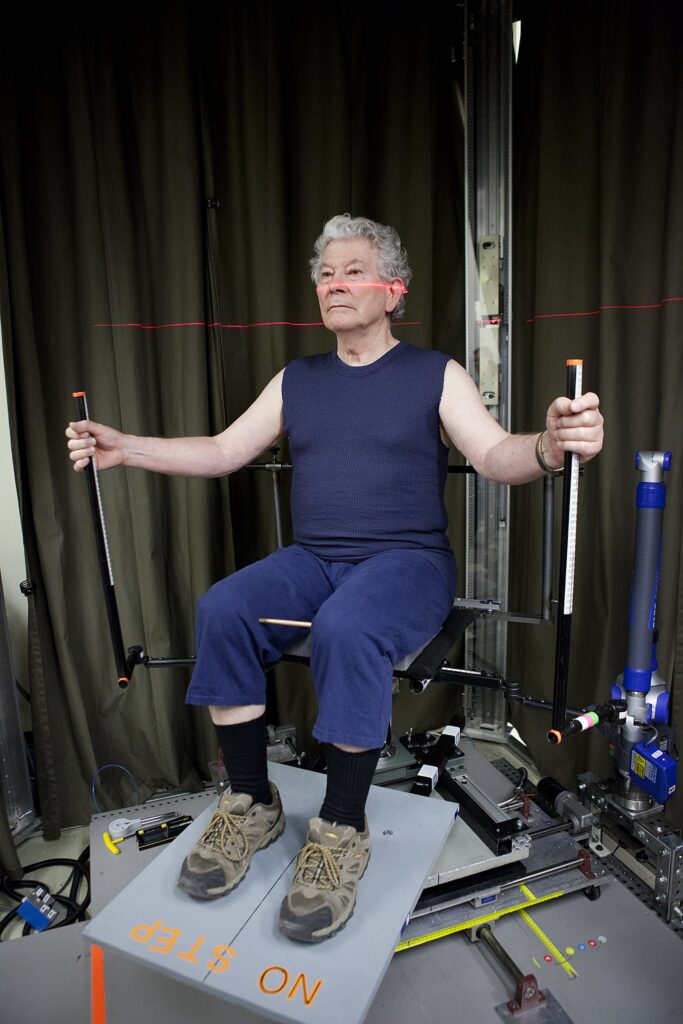
UMTRI began as a quest to find a solution to a problem. In the 1950s and 60s, highway fatalities spiked in part due to suburban growth and the economic boom. So, in 1965 the University of Michigan teamed with select U.S. automakers and the Automobile Manufacturers Association, who donated $10 million to establish what is now the university’s Transportation Research Institute. UMTRI’s founding mission was to reduce highway fatalities by studying ways to help make drivers, cars, and infrastructure safer.
Since its founding, UMTRI has been a respected authority on auto safety, predating even the U.S. Department of Transportation and its National Highway Traffic Safety Administration (NHTSA) – which were not established until 1967 and 1970, respectively.
Combining the resources of a large academic institution with global automakers like Toyota has yielded benefits beyond what each could do alone. Each entity’s strengths complement the other, but it’s the lasting human relationships between researchers at the two Ann Arbor institutions that have created enduring progress. Modeling these relationships, Hallman recently moderated a panel of UMTRI scientists discussing the most important safety research needs at the UMTRI 60th Anniversary Symposium in late 2025.
“CSRC is really helping us advance our vision and mission on transportation safety,” UMTRI Director Henry Liu said. “They help with the research, but the small personal interactions also matter. There is a lot of discussion between CSRC and our faculty members.”
One of the best examples of collaboration involves the development of a digital human-body model to study crash injury. Physical crash-test dummies, despite the name, are actually very high-tech – loaded with dozens of sensors and instruments to measure the effect of crash physics on body parts like the head, neck and spine. The cost of a new dummy can approach $1 million. Even then, that dummy is made to a specific size and shape and takes substantial effort to design and manufacture. It was a big accomplishment last year when NHTSA unveiled a new female dummy, known as THOR-5F, intending to enhance its crash-testing program.
UMTRI is on the forefront of research using digital human body models that potentially can speed up and simplify the development of crash safety enhancements. CRSC funded studies going back to its founding in 2011 to capture large datasets of driver and passenger body shapes and postures. UMTRI researchers launched HumanShape.org, a website that provided access to customizable 3D body shapes of adults and children that could be used to improve vehicle interiors.

In 2015, the team leveraged this and additional prior work from Toyota – a virtual human-body model called THUMS (Total Human Model for Safety), a kind of digital dummy – to pioneer a new digital approach to crash safety studies. At the time, THUMS was a powerful tool for simulating humans involved in crashes, but was only available in the same sizes as the crash test dummies. In collaboration with CSRC, UMTRI developed an approach that could quickly and robustly morph THUMS into any adult body size and shape.
Although UMTRI had developed rich data on both interior and exterior anatomy, some researchers didn’t think that morphing human models was possible, said Matt Reed, a biomechanics research professor at UMTRI. Toyota’s contributions helped change minds.
“Human body models allow us to understand how systems work for different kinds of people – better crash safety technologies like pretensioners, load limiters and air bags,” Reed said. “There really have been dramatic improvements over the last 15 years.”
But the human body models are only one example of the CSRC-UMTRI collaboration. Naturalistic driving studies have identified some surprising reasons people engage in risky behavior like speeding, tailgating or texting. These reasons include the context of the drive (e.g., time of day, level of traffic) more than the type of driver. That research also led to 26 guidelines for policymakers working to discourage behavior that’s known to make roads less safe. The research also showed that systems displaying speed limits in real time for the driver, like Toyota Safety Sense, may help make a meaningful impact on slowing traffic, particularly for younger drivers in regular communication with their parents.
On crash avoidance, a CSRC-UMTRI collaboration showed how pedestrian fatalities were distributed across different crash types, showing that child fatalities were more likely to be walking than riding bicycles.
That’s helped focus resources on actions that can enhance safety, like novel pedestrian crash-avoidance test dummies. These pedestrian dummies now are being used by IIHS (Insurance Institute for Highway Safety) and NHTSA in testing programs aimed at increasing the prevalence of automatic emergency braking and other advanced safety features.
With UMTRI’s Mcity automated driving test track, CSRC collaborated with researchers on a groundbreaking look at “roadmanship,” a concept to quantify how automated vehicles can drive more like humans and less like robots. Roadmanship, and the related concepts built upon it, can help reduce tension as robotaxis rapidly are being deployed in cities across America, Europe and China.
CSRC’s Hallman said the value of working with UMTRI goes well beyond the individual research projects. UMTRI’s work spans across other automakers, suppliers, NHTSA, and more. As ideas are exchanged between UMTRI and CSRC, the teams can be confident that research questions and results will be informed by the nuances and intricacies of the full automotive ecosystem. Projects can be designed for maximum impact, and findings are more likely to help other automakers, regulators and university researchers.
“CRSC’s mission is to conduct open research collaborations that help inform future products and policy, leading to a safe mobility society for all,” Hallman said. “Building these relationships with long term collaborators like UMTRI helps us broaden our horizon to where we’re trying to go, getting to zero traffic fatalities someday – however long it takes.”


Originally published May 5, 2026
 Add to Cart
 Print
Print Convert to PDF